
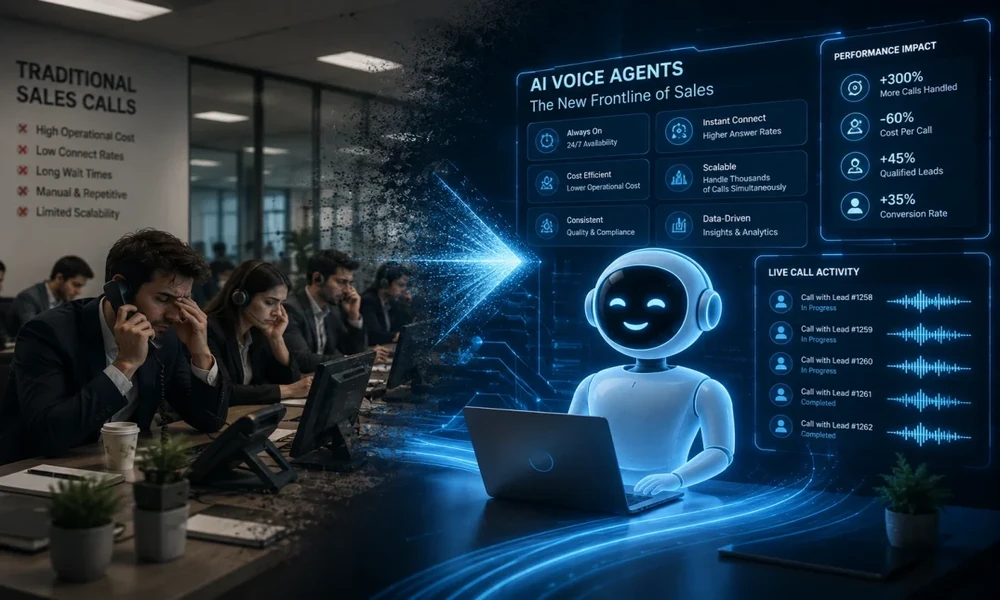
Sales calls remain one of the most direct ways for businesses to understand prospects, answer questions, and move opportunities forward. However, managing calls at scale can be difficult. Teams may struggle to respond quickly, follow up consistently, or give every lead the attention it deserves.
AI voice technology is helping businesses address these challenges. It can support routine sales conversations, qualify leads, book appointments, and keep prospects engaged before a human representative takes over. When used thoughtfully, it strengthens a sales process rather than replacing the people behind it.
The Challenge of Managing Sales Calls at Scale
Most sales teams want to reply to new enquiries as quickly as possible, but daily workloads can get in the way. Representatives may be attending meetings, dealing with existing customers, or prioritising urgent tasks. As a result, a promising lead might wait too long for a call back.
This delay can be costly. Prospects often contact more than one provider, particularly when they are comparing prices, services, or availability. A business that responds first with a helpful conversation has a better chance of staying at the front of the prospect’s mind.
AI voice systems can provide a reliable first response, helping companies stay available even when their sales team is busy.
What an AI Voice Engine Can Support
An AI voice engine is designed to conduct structured, natural conversations over the phone. It can follow a company’s preferred sales process, ask qualification questions, share basic information, and record the prospect’s answers for the team.
Qualifying New Leads
Not every enquiry has the same level of urgency or purchasing potential. Sales teams need to understand which prospects are ready to talk, what they need, and whether the business is the right fit.
An AI voice engine can ask questions about a prospect’s requirements, timeline, location, budget range, or preferred service. This information can then be passed to a salesperson, allowing them to prepare for a more relevant and productive follow-up conversation.
For instance, a home improvement company could use AI to ask what type of work a customer needs, when they want it completed, and whether they would like an estimate. The sales team can then focus their time on arranging the next step.
Booking Consultations and Demonstrations
Scheduling is a common point of friction in the sales process. Prospects may be interested but too busy to exchange several emails or wait for a callback.
AI calling can help offer suitable appointment times, confirm details, and send the lead to the right person. This is useful for businesses that rely on consultations, demonstrations, quotes, or discovery calls.
A smoother booking process can reduce drop-off and create a better first impression.
Following Up With Existing Leads
Sales pipelines often contain leads that were interested but not ready to buy. Perhaps their budget was not available, their project was delayed, or they needed more time to compare options.
Instead of allowing those contacts to disappear, businesses can use AI voice technology to carry out polite follow-up calls. The system can check whether circumstances have changed and identify prospects who would now like to speak with a representative.
Keeping Sales Calls Personal
Technology should make the customer experience easier, not colder. The most effective approach is to use AI for routine tasks while ensuring people are available for the conversations that need experience, empathy, or detailed product knowledge.
A prospect may be happy for AI to confirm an appointment or answer a simple question. However, they may prefer a human conversation when discussing complex requirements, negotiating a price, or making an important purchase decision.
Businesses should set clear rules for when an AI call agent transfers the conversation or arranges a human callback. They should also make sure the language used is natural, helpful, and appropriate for their audience.
Companies exploring an AI voice engine for sales calling should consider how it fits with their existing CRM, sales process, and customer service standards. The goal is to make each stage of the buyer journey more responsive and organised.
FAQ
Can AI voice technology make outbound sales calls?
Yes. It can support outbound activity such as lead follow-up, appointment reminders, qualification calls, and re-engagement campaigns. Businesses should ensure that their calling approach follows applicable privacy and marketing rules.
Does an AI voice engine replace sales representatives?
No. It is most useful for repeatable, early-stage tasks. Sales representatives are still important for relationship-building, complex questions, negotiations, and closing valuable opportunities.
How does AI improve lead response times?
An AI system can respond to enquiries promptly and handle a greater number of calls at once. This reduces the chance that a lead is left waiting for a reply.
What should businesses measure after introducing AI calling?
Useful measures include response speed, qualified leads, appointments booked, conversion rates, call outcomes, and customer feedback.
Conclusion
AI voice technology can help businesses run a more responsive and consistent sales operation. By handling routine calls, gathering useful information, and arranging the next step quickly, it allows sales teams to focus their energy where human expertise has the greatest impact.