
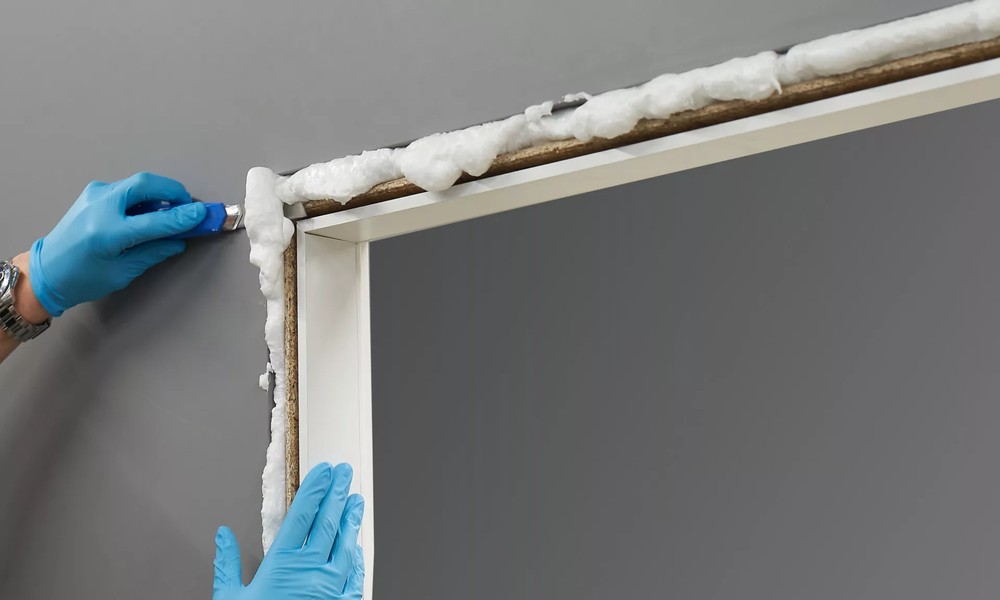
Openings, holes, and voids are inevitable in any structure and proper sealing of these voids would make a big difference to the energy efficiency, waterproofing and structural integrity. One of the most extensive and popular construction industry sealing and filling products is expanding foam. This guide includes the applications of expanding foam in various building types and what one should know before using the appropriate product.
Application of expanding foam in a building
What expanding foam is and how it works
Expanding foam is a type of product which expands when in contact with air and water which happens to be moisture. It occupies loopholes, empty spaces and other irregularities and interstices, which cannot be readily reached by other products. After being cured, it is rigid or rather semi flexible, it creates a cell structure that gives insulation, adhesion and airtight seal. Some of the main properties of growing foam that render it useful in building construction include:
- Expansion capability: Foam infiltrates irregular shaped gaps and spaces which rigid materials are unable to close.
- Adhesion to most surfaces: Bond to timber, masonry, concrete, metal and most building substrates without a primer.
- Thermal insulation: Cured foam offers an insulating layer, which minimizes the passage of heat by gaps and penetrations.
- Acoustic dampening: Foam acts to soundproof through the walls, floors and ceiling penetrations in its fully-cured state.
- Moisture resistance: Closed-cell foam types are resistant to water entering and should be used in humid or in the open building conditions.
Common construction applications for expanding foam
Foam has expansions on virtually all levels of a building construction project. The product seals the gaps in framing and cladding, fit-out and finishing, and undermines the performance of building envelopes. With this knowledge of the most widespread applications, trades people and builders would know the appropriate foam to use in a particular job. Expanding foam has been used in common building and construction applications which include:
- Window and door frame installation: Sealing the gap between window frame and the rough opening to insulate and stabilize the set up.
- Pipe and cable penetrations: Sealing pipes, conduits, and cables which go through walls, floors and ceilings.
- Roof and eave gaps: Blocking places in roofs and eaves where pests, moisture and air can enter the structure.
- Cavity wall insulation: Foam is injected into wall cavities as a part of enhancing thermal performance to existing or new construction.
Types of expanding foam for different building needs
Not every expanding foam product will work the same. The construction industry employs various foam formulas that are applicable to the various degrees of expansion, flexibility, fire-resistance and moisture exposure. Under the right choice of type, over-expansion, cracking or poor sealing of the product does not occur when it cures. The types of foams that can be expanded to apply to particular construction uses are:
- Standard expanding foam: Versatile product that is applicable to fill gaps, install windows, and non-distressful sealing processes.
- Low-expansion foam: Minimal-expansion formula that is intended to be used around frames and door sets with pressure damage being a threat.
- Fire-rated foam: Intumescent foam which expands when subjected to heat in order to close up any hole and allow the fire compartment to contain its contents.
- Waterproof or hydrophobic foam: Closed-cell product that is appropriate in exterior or underground or high-moisture building applications.
- Gun-grade foam: Foam sprayed with a professional foam gun on the increased accuracy and less wastage on larger projects.
Conclusion
Expanding foam is a high-performing, practical product that is applicable and used to seal, insulate and fill a broad spectrum of building and construction applications. Precisely selecting the proper foam type to be used on every task and using it with a corresponding technique will possess credible results that will lead to a building with a well-sealed and energy-efficient construction.